
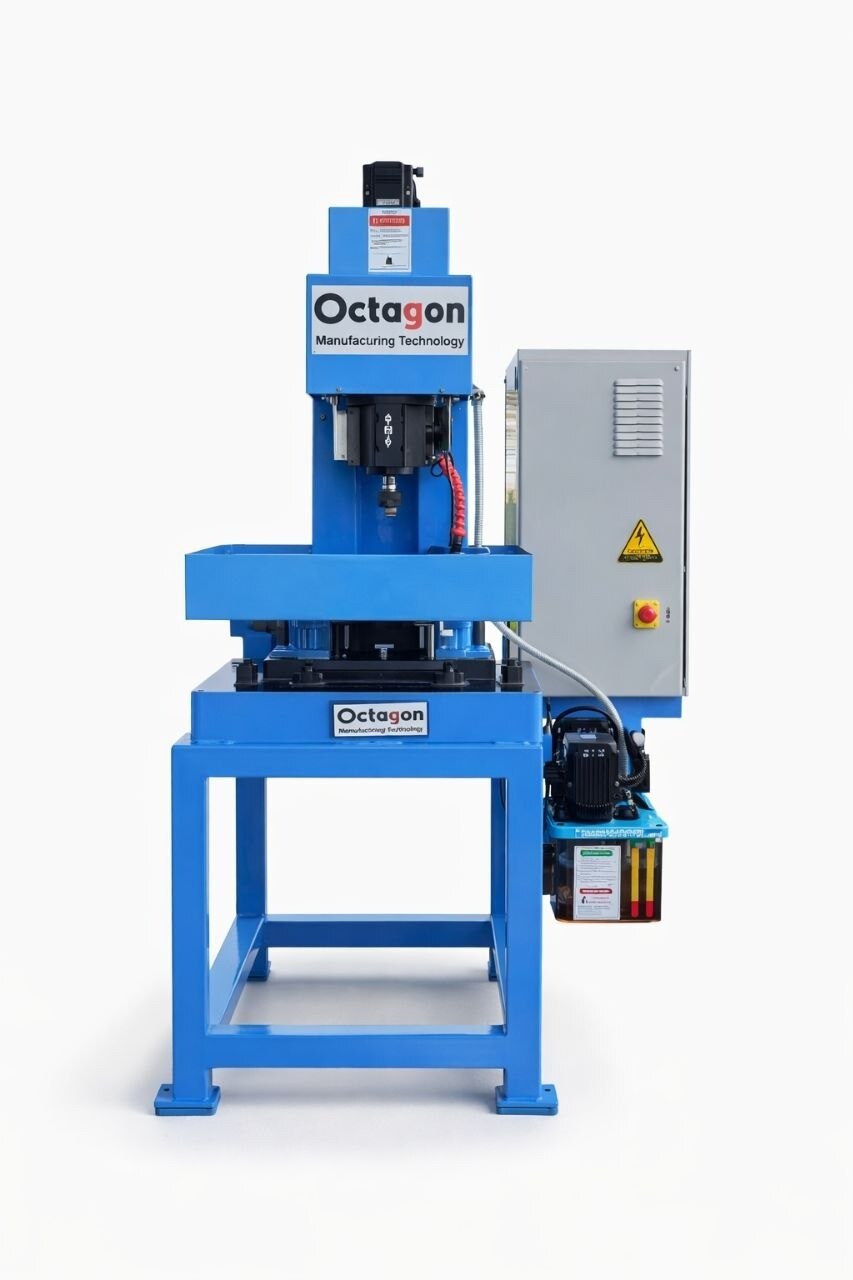
A dedicated drilling station earns its place when repeated hole patterns, operator loading time and daily volume make a general-purpose machine too slow or inconsistent. By the end, you will be able to match the machine architecture and loading method to your part, calculate achieved capacity and test whether the investment improves total production output.
Key takeaways
- Match spindle count and axes to the hole pattern, tolerance and cycle time.
- Measure loading, drilling, tool changes and unloading before calculating takt fit.
- Compare machine cost with labour, scrap, downtime and output at your actual volume.
- Prove capability, chip control, safety and acceptance criteria before installation.
What an SPM drilling machine changes on a Pune production line
An SPM drilling machine is an application-specific production machine built around one component, its hole pattern and its required output. It combines dedicated fixturing, fixed tool sequencing, drill guides or bushes, one or more spindle heads, chip handling and automated loading.
Unlike a general-purpose CNC machining centre, it is engineered to repeat a narrow operation quickly rather than accommodate many unrelated parts.
| Machine type | Main strength | Main limitation |
|---|---|---|
| SPM drilling machine | Short, repeatable cycle for one high-volume part | Custom tooling and changeover effort |
| CNC machining centre | Flexible programs, tools and part mix | Longer cycle and more operator intervention |
| Radial drill | Low-cost access to varied positions | Manual positioning and weaker repeatability |
| Transfer line | High output across several operations | High investment and poor flexibility |
On a Pune automotive, agricultural-equipment or engineering line, the spm drilling machine benefits in pune are clearest when demand is stable and the same component runs daily. It addresses:
- Long loading, positioning and measuring time
- Inconsistent hole location from manual marking or clamping
- A drilling operation that limits the entire line
- High labour content across repeated hole patterns
- Variation caused by changing operators or tool sequences
The machine does not automatically beat a flexible CNC. Low volumes, frequent design changes or many variants can make a standard machining centre cheaper overall. Judge the investment by achieved good parts per hour after loading, unloading, minor stops, tool changes, maintenance, rejected parts and downstream delays—not by spindle speed alone.
Single axis, two axis or multi-spindle: which architecture fits the part?
Choose the architecture from the hole pattern and takt time, not from the axis count alone. A single-axis drilling SPM suits a fixed row of holes controlled by one feed or positioning direction.
A two-axis drilling SPM earns its cost when hole locations move in X and Y, a second controlled feed is needed, or two stations must sequence separate operations.
| Option | What it means | When it applies |
|---|---|---|
| Single-axis drilling SPM | One controlled feed or positioning axis for a dedicated operation | Fixed hole location or one-direction pattern, narrow part mix, high repeat volume |
| Two-axis drilling SPM | X/Y positioning, a second feed, or two independent stations | Confirm the axis diagram; choose it for changing coordinates or two-stage work when the axes provide a real takt benefit |
| Multi-spindle machine | Several spindles drill defined holes in one cycle | Repeated hole count and spacing justify simultaneous cutting; confirm spindle spacing, depth control and chip clearance |
| Four-spindle oil-hole machine | Four dedicated spindles address an oil-hole pattern | High-volume parts with four repeatable oil holes; verify hole angle, diameter, depth, coolant delivery and access |
Do not assume “two axis” means two holes cut together. Ask whether axes interpolate, move sequentially or only position, and whether both spindles cut simultaneously. Compare the complete load-to-unload cycle, including chip evacuation and fixture reset.
The fixture often decides the result. Require functional datums, support beneath thin sections and chip-proof locating surfaces; a fast axis cannot correct a part that shifts on the locator. Choose a flexible machining centre instead when variants, frequent changeovers or low batches outweigh dedicated-cycle savings.
How automated SPM drilling runs from loading to unloading
A normal cycle starts with loading the raw part against fixed datums, clamping it, confirming part presence, drilling the programmed hole pattern, unclamping, and transferring the finished part. Automated SPM drilling can also include barcode recipe selection, tool-condition monitoring, chip removal and a downstream conveyor.
The loading method determines whether the operator feeds the machine continuously or waits beside it. Manual loading into a dedicated fixture reduces equipment cost, but the operator still handles every part and becomes the constraint when loading takes longer than drilling.
Pallet loading lets one part run while another is prepared outside the machining zone, reducing waiting and supporting steadier production.
Robot loading, gantry loading or a conveyor transfer can reduce direct handling, but each adds guarding, sensors, maintenance and recovery procedures. A fast spindle does not improve output if an empty fixture, slow transfer or full downstream buffer stops the station.
Check the complete cycle rather than quoting spindle cutting time:
- Record loading, clamping, drilling, unclamping and unloading as separate times.
- Measure operator interventions, including fixture clearing, recipe confirmation and rejected-part removal.
- Confirm part-presence sensors, clamp confirmation and tool monitoring before the spindle starts.
- Provide an infeed buffer when loading is slower than drilling.
- Define how the cell handles a missing part, tool alarm, jammed transfer and power restart.
- Calculate achieved parts per hour after minor stops, changeovers, maintenance and quality rejects.
How to calculate takt fit and the SPM break-even point
Calculate takt before comparing machines: available production seconds per shift divided by required good parts per shift. An spm drilling machine fits only when its complete load-to-unload cycle, including inspection and transfer, is below takt; a faster spindle is irrelevant if the buffer or downstream operation limits output.
| Machine | Complete cycle used | Achieved good parts per hour |
|---|---|---|
| Conventional CNC | Cutting, tool changes, loading, unloading, minor stops and changeover time allocated per part | 3,600 ÷ complete cycle seconds × availability × performance × quality |
| SPM drilling machine | Automatic loading, fixture clamping, drilling, chip clearing, unloading, transfer, planned maintenance and changeover time | 3,600 ÷ complete cycle seconds × availability × performance × quality, capped by the bottleneck |
| Automated SPM drilling cell | The same calculation, plus operator intervention and rejected-part losses | Use measured good output from a trial, not nominal spindle capacity |
Use one costing period, such as a year. Add labour, energy, tooling, maintenance, floor space, scrap, inspection and changeover cost to the machine payment or depreciation; include custom fixtures, transfer equipment and controls for the SPM.
- Cost per good part = total period cost ÷ achieved good parts.
- SPM saving per part = conventional CNC cost per good part − SPM cost per good part.
- Break-even volume = SPM’s additional fixed investment ÷ saving per part.
The SPM breaks even only above that volume. If demand, geometry or part mix changes frequently, include lost flexibility and extra changeover time; a conventional CNC can remain cheaper despite its longer cycle.
What to specify and prove before installing the drilling cell
A quotation that says “high-speed drilling” is incomplete. Require a guaranteed achieved parts-per-hour figure based on loading, unloading, tool changes, minor stops, planned maintenance and rejected parts—not spindle speed or theoretical cutting time.
Specify these items before comparing suppliers:
- Part drawing revision, material, hole diameter, depth, position tolerance, chamfer, burr limit and datum scheme.
- Fixture location, clamping force, part-presence sensing, loading method, buffer capacity and operator intervention rate.
- Axis travel, feed range, spindle speed, simultaneous or sequenced cutting, tool life, coolant, chip removal and changeover time.
- Controller, recipe selection, barcode interface, alarm history, data export and recovery after sensor or communication failure.
- Guarding, interlocked access, emergency stops, safe restart, pneumatic and hydraulic energy isolation, and risk assessment to ISO 12100 with safety controls designed to ISO 13849-1.
| Requirement | Specify in quotation | Prove at acceptance |
|---|---|---|
| Technical | Complete load-to-unload cycle and utilities | Run the approved part at the guaranteed rate |
| Quality | Hole size, position, burr and rejection limits | Measure consecutive parts with calibrated gauges |
| Safety | Guard, interlock and fault-response behaviour | Test every stop, restart and isolation function |
| Capacity | Changeover, maintenance and buffer assumptions | Demonstrate the agreed shift trial and records |
For Pune’s automotive and engineering supply chain, these details determine the real spm drilling machine benefits in Pune. OCTAGON MANUFACTURING TECHONOLOGY can be evaluated against the same evidence, including whether a two axis drilling SPM actually cuts simultaneously or only repositions. A signed acceptance protocol prevents “SPM drilling machine” claims from becoming disputed output.
Related products
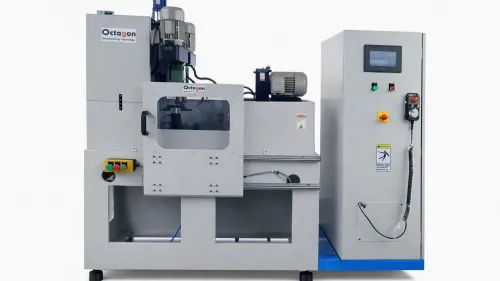
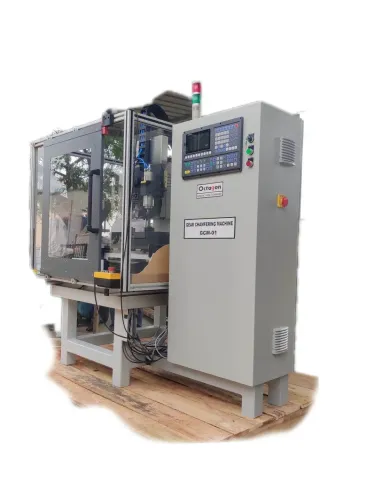
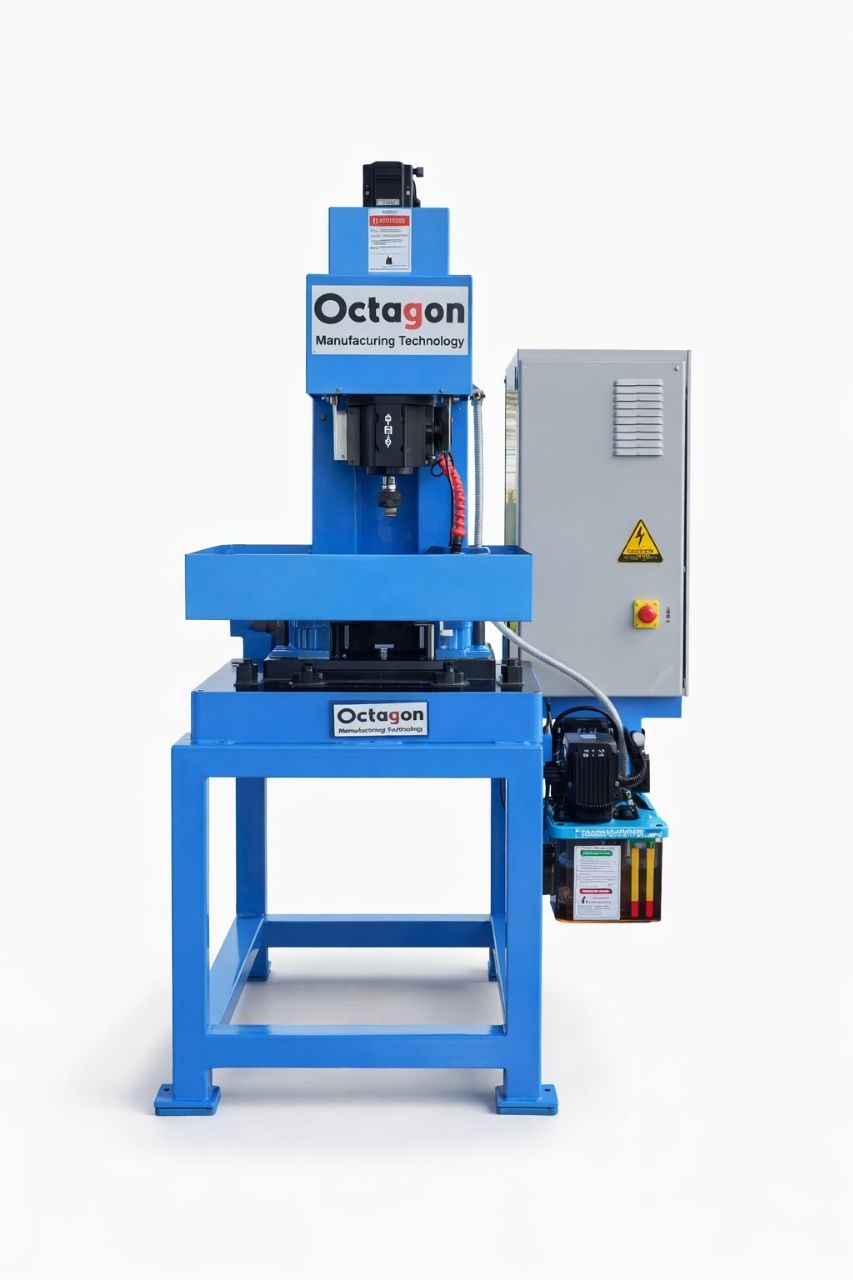 | spm cnc Single Axis and Two Axis CNC Drilling SPM SINGLE-AXIS CNC DRILLING MACHINE – OCTADRILL D50 Compact and efficient CNC drilling machine designed for high-speed, accurate drilling operations. View product → |
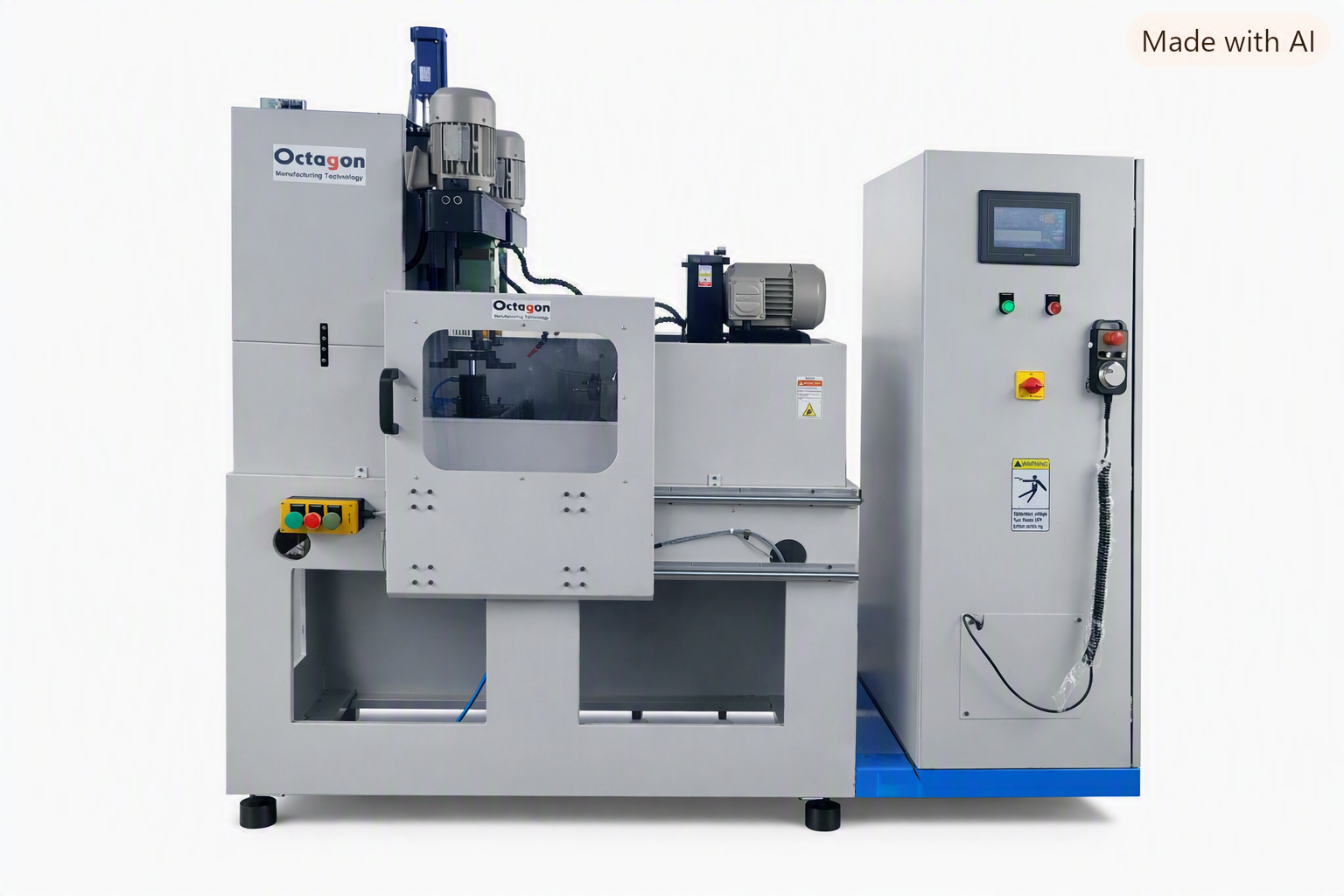 | cnc High-productivity 4-spindle CNC oil hole drilling SPM designed for accurate, repeatable and high-volume drilling operations. View product → |
Frequently asked questions
What does an SPM drilling machine change on a Pune production line?
It replaces repeated manual drilling steps with dedicated fixturing, fixed tool sequencing, controlled drilling and automated part movement. The result is more consistent cycle time and hole location when the component and volume justify a dedicated machine.
When should you choose a single axis drilling SPM?
Choose a single axis drilling SPM when the holes share one drilling direction and a single spindle sequence meets the required cycle time. It is simpler than a multi-axis design but cannot machine opposing directions without repositioning the part.
When is a two axis drilling SPM the better choice?
A two axis drilling SPM fits components requiring drilling from two directions or simultaneous work on two faces. Confirm that the fixture can provide access, rigidity and safe chip evacuation on both axes.
How do you calculate whether an SPM fits production takt?
Divide available production time by required good parts to find takt time, then compare it with the complete automated cycle: loading, clamping, drilling, tool retraction, unloading and allowances for stops. Include planned availability and reject handling rather than timing drilling alone.
What should you prove before installing an automated SPM drilling cell?
Prove hole position and size capability, cycle time, tool life, chip evacuation, fixture repeatability, loading reliability, guarding, operator access and recovery from faults. Record each result in a signed acceptance test using production-intent parts and tooling.